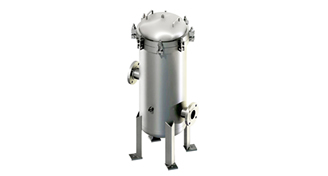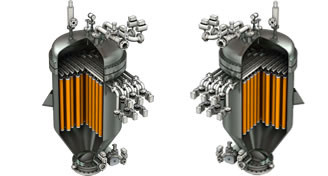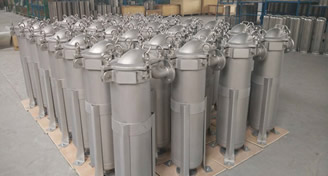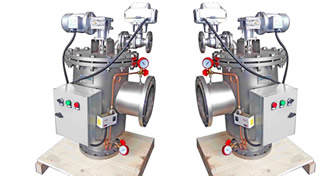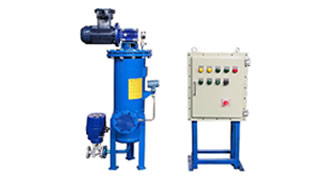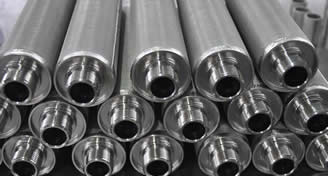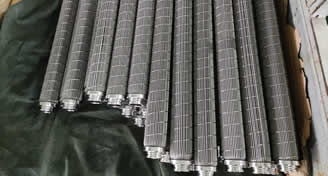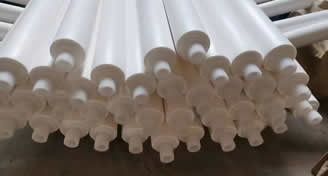
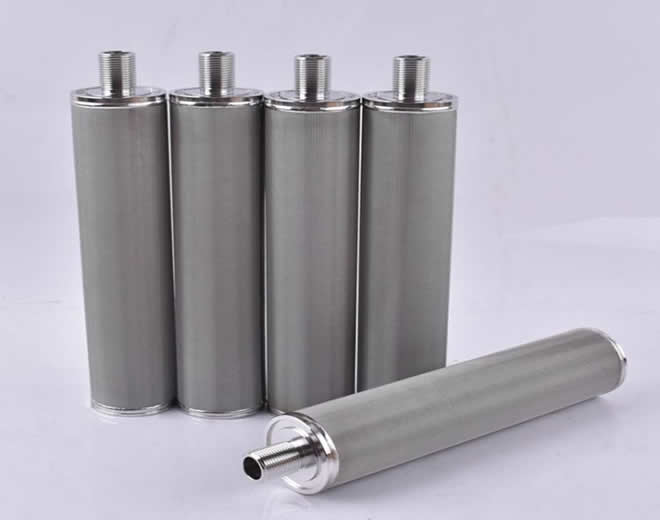
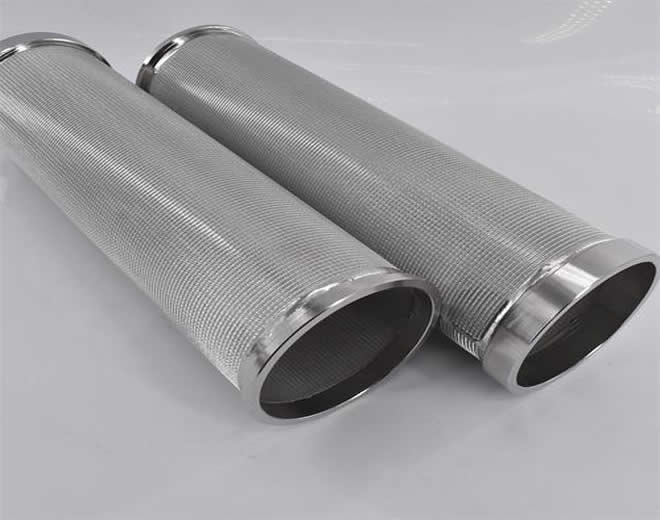
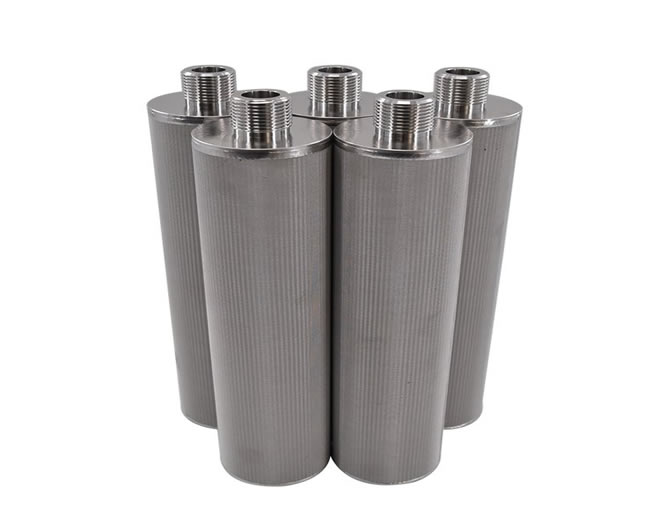
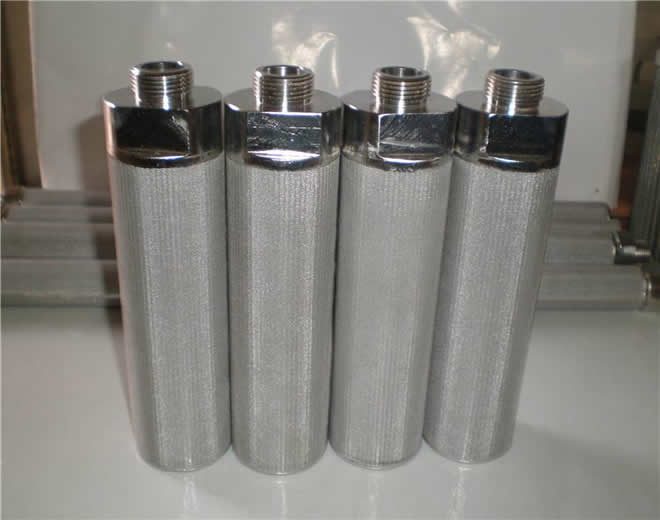
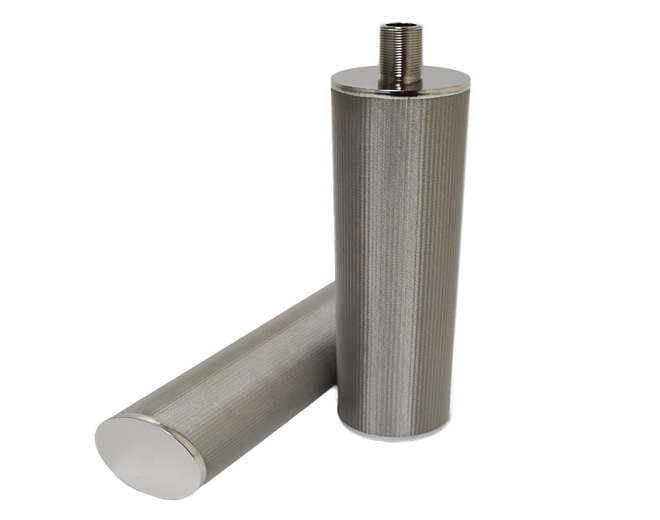
A Gas Stainless Steel Sintered Mesh Filter Cartridge is a high-performance, rigid porous filter element manufactured by diffusion bonding (sintering) multiple layers of stainless steel wire mesh under a vacuum at high temperatures. Unlike simple woven screens, this process creates a monolithic, three-dimensional porous structure with integrated layers, offering exceptional durability and performance for demanding gas filtration applications.
Key Characteristics:
Material: Austenitic stainless steels (304, 316, 316L) for excellent corrosion resistance, high-temperature tolerance, and mechanical strength.
Process: Sintering. Creates a permanent metallurgical bond between layers, eliminating delamination risk.
Structure: Multi-layer composite design, typically 2-5 layers or more.
The classic asymmetrical, graded design enables surface filtration, where particles are trapped on the outer surface for easy cleaning.
Protective Layers (Outer, two layers): Coarse square or Dutch weave mesh. Protects the fine filter media from impact and pre-filters large debris.
Filtration Layer (Core layer): High-precision, single-aperture plain weave mesh. Precisely defines the filtration rating (e.g., 1, 5, 10, 40 microns).
Reinforcement/Diffusion Layer (Inner layer): Robust, coarse mesh. Provides structural integrity to withstand high differential pressure and promotes even flow distribution.
High Strength & Rigidity: Withstands high pressure differentials, mechanical shock, and vibration without collapsing.
Excellent Cleanability & Regeneration: Surface filtration allows for highly effective cleaning via back-pulsing (gas反吹), ultrasonic cleaning, or chemical soaking, ensuring a long service life.
Extreme Environment Resistance:
High Temperature: Continuous operation up to 480°C (896°F), with higher peak tolerance.
Corrosion Resistance: Suitable for a wide range of acidic, alkaline, organic, and corrosive gases.
High-Pressure Resistance: Can handle differential pressures of several MPa.
High Filtration Accuracy & Low Initial Pressure Drop: Uniform pore size ensures consistent particle capture with minimal flow resistance.
No Media Migration: No adhesives or fibers to shed, making it ideal for clean processes in food, pharmaceuticals, and semiconductors.
Excellent Weldability: Can be seamlessly welded to stainless steel flanges or fittings for leak-proof connections.
Due to its reliability and performance, it is critical in industries requiring ultra-clean or process-critical gas filtration:
Chemical & Petrochemical: Purification of process gases (H₂, N₂, syngas), catalyst recovery, pre-filtration for gas dryers.
Power & Energy: Gas turbine inlet air filtration, synthetic natural gas (SNG) filtration, nuclear ventilation systems.
Electronics & Semiconductor: Point-of-use filtration for high-purity specialty gases (NF₃, WF₆), cleanroom ventilation, compressed air for tools.
Metallurgy: High-temperature flue dust recovery, hot blast stove systems, coal gas purification.
Pharmaceutical & Food: Sterile air for fermentation, process compressed air (to prevent product contamination).
Environmental Protection: High-temperature flue gas dust removal, waste incineration flue gas treatment.
Aerospace: Test stand intake filtration, aero-engine system gas filtration.
Key parameters to specify when ordering:
Filtration Rating (Micron): Absolute or nominal, based on the required particle removal efficiency.
Physical Dimensions: Outer Diameter (OD), Inner Diameter (ID), Length.
Connection Type: Flange (e.g., DN50/DN80), threaded (NPT, BSP), or quick-release clamp. Specify gasket material.
Operating Conditions:
Gas Media: Specific composition and corrosiveness.
Operating Temperature: Maximum and normal ranges.
Operating Pressure & ΔP: Maximum allowable and normal differential pressure.
Flow Rate (Nm³/h): Determines the number of cartridges required.
Material Grade: 304, 316L, or more exotic alloys (Hastelloy) for highly corrosive environments.
Configuration: Standard 5-layer, or customized (e.g., thicker protective layers for heavy particulate loads).
Pre-Installation: Inspect cartridges and seals. Ensure upstream piping is clean to prevent contamination.
In-Service Monitoring: Track the differential pressure (ΔP) across the filter. A rising ΔP indicates particulate loading.
Cleaning Methods:
Online Back-Pulsing: The most common method. Use clean, dry compressed air or nitrogen pulsed from the inside out.
Offline Cleaning: Ultrasonic baths or chemical cleaning for stubborn contaminants (e.g., oils). Must be thoroughly dried before reuse.
Replacement: Replace the cartridge when cleaning no longer restores acceptable ΔP or if physical damage is detected.