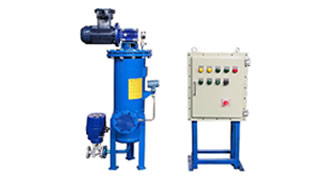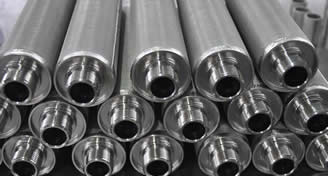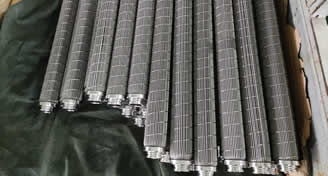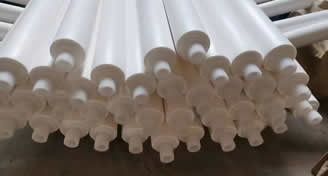

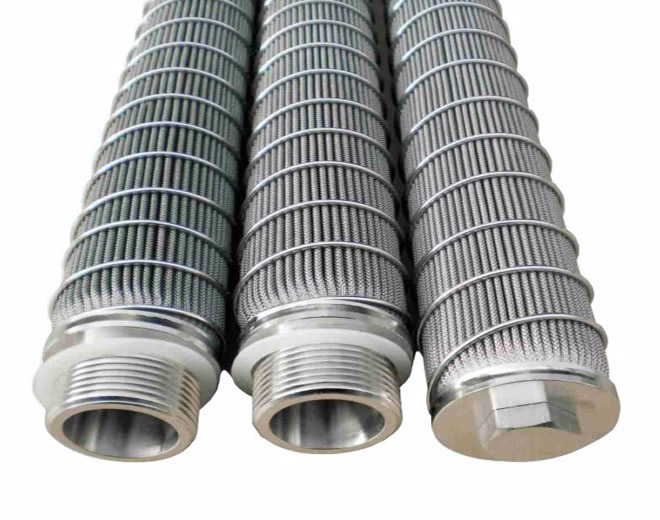
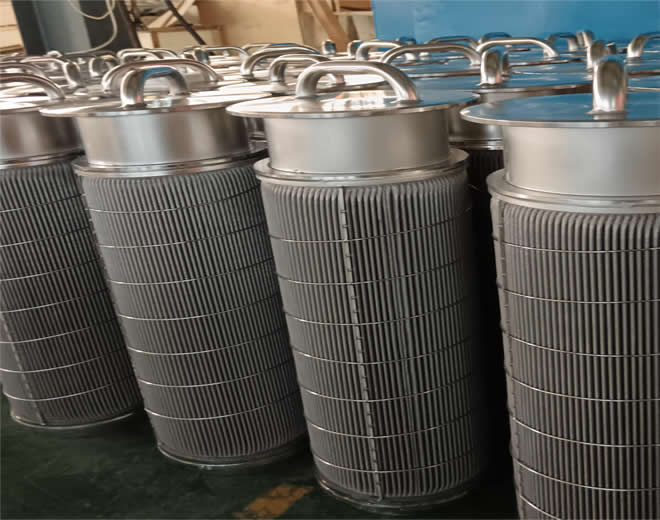
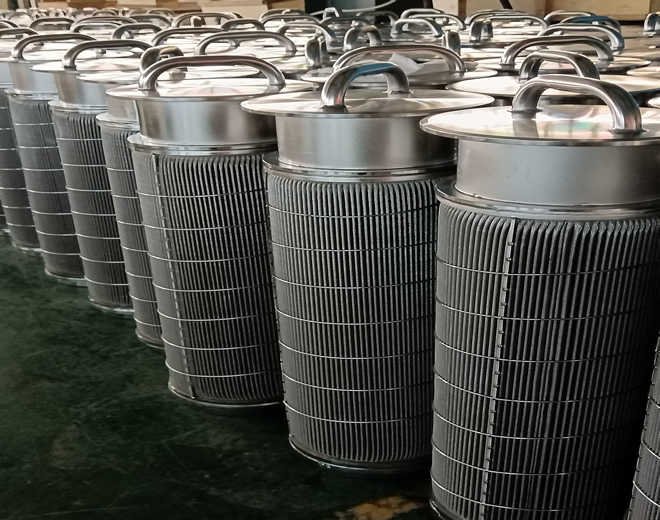
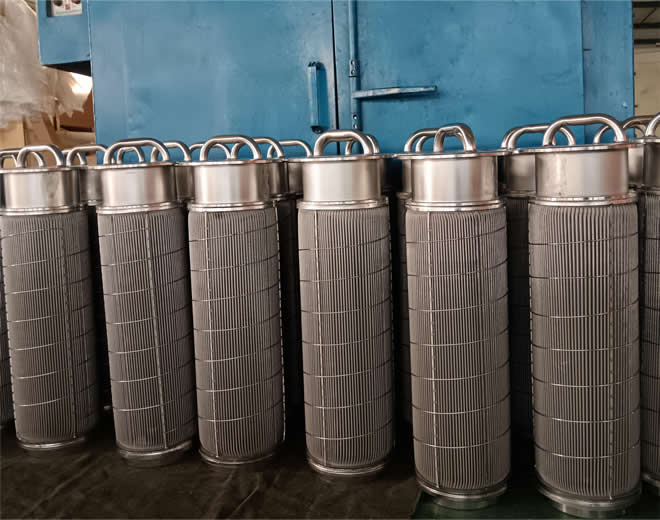
In high-temperature, high-pressure fluid processing applications such as polymer manufacturing, petrochemical refining, and chemical fiber spinning, filtration accuracy and media durability directly determine final product quality and production efficiency. The wound stainless steel melt filter cartridge – an all‑metal filtration element designed specifically for high‑viscosity melts – has become an indispensable component in advanced manufacturing processes thanks to its outstanding high‑temperature resistance, mechanical strength, and cleanable/reusable characteristics.
A wound stainless steel melt filter cartridge is a depth filtration element manufactured by precisely winding textile yarns or stainless steel metal fibers around a perforated core using a specialized process. The primary filtration layer consists either of sintered stainless steel fiber felt (which offers high porosity and depth filtration capability) or stainless steel wire mesh (which provides high strength and dimensional stability).
Depending on the filter media, melt filter cartridges are divided into two main types:
Pleated stainless steel mesh cartridges – feature smooth flow channels, easy cleanability, high temperature and corrosion resistance, no media shedding, and long filtration cycles.
Pleated sintered stainless steel fiber felt cartridges – made from stainless steel fibers sintered at high temperature, forming a porous depth filtration structure with high porosity, excellent permeability, high dirt‑holding capacity, and good regeneration performance.
The core technology of a wound stainless steel melt filter cartridge lies in its precision winding process. By controlling winding density and pore shape, cartridges with different filtration ratings can be produced, creating a honeycomb or graded pore structure that is denser on the outside and more open on the inside. This structure contains thousands of curved, rhomboid filtration channels that effectively capture suspended solids, particles, and rust from the fluid.
Typical construction features:
Outer shell – perforated stainless steel protective sleeve that distributes flow and provides mechanical protection. An internal support core ensures no deformation or rupture under high differential pressure.
Multi‑layer filtration media – includes a protective layer, an accuracy‑control layer, a distribution layer, and several reinforcing layers. These layers work together to capture particles of various sizes while maintaining a low pressure drop.
End fittings – available in standard 222, 226, threaded (M36, M28, etc.), flange, and tie‑rod configurations, customizable to match existing equipment.
Wound stainless steel melt filter cartridges deliver outstanding performance in extreme operating conditions:
Filtration rating – covers a range from 0.5 μm to 300 μm, selectable according to specific process requirements. Removal efficiency exceeds 95% for particles in the 0.1–100 μm range.
Temperature resistance – stable operation from –200 °C up to 600 °C, depending on materials and seals. Sintered stainless steel fiber felt can withstand continuous filtration at 650 °C, making it ideal for high‑temperature melt filtration.
Pressure resistance – typical working pressure 0.1–30 MPa; high‑strength designs can handle up to 90 MPa.
Dirt‑holding capacity – the three‑dimensional network structure of sintered stainless steel fiber felt achieves porosity up to 85%, providing very high dirt storage (16.9–41 mg/cm²). Pressure drop rises slowly, significantly extending service life.
A major advantage of wound stainless steel melt filter cartridges is their ability to be cleaned and reused multiple times. Unlike ordinary glued pleated cartridges that degrade irreversibly, all‑metal melt filter cartridges are manufactured by welding, giving them structural integrity that withstands high pressures without damage or deformation. They offer effective reverse‑flow cleaning, a smooth surface, and uniform pore structure that resists particle adhesion.
Common cleaning methods include:
Reverse flushing with liquid or filtrate – can be performed online without interrupting production.
Ultrasonic cleaning – thoroughly removes fine particles and surface deposits.
High‑temperature calcination – removes organic residues such as polymers.
Chemical cleaning – uses appropriate solvents to dissolve specific contaminants.
After proper cleaning, filtration performance can be restored to near‑original levels, significantly reducing operating costs and supporting environmentally friendly industrial practices.
Thanks to their combination of high precision, strength, and thermal/chemical resistance, wound stainless steel melt filter cartridges are widely used in demanding filtration applications:
Chemical fiber industry – filtration of polyester, nylon, and other polymer melts before spinning to remove solid particles, gels, and unmelted materials, preventing spinneret blockage and improving fiber uniformity and spinning quality.
Plastic extrusion/injection molding – filtering contaminants from polymer melts during pelletizing, film, and pipe production, ensuring a smooth surface finish.
Petrochemical industry – purification of polymer melts (e.g., PP, PE) and removal of solid particles from lubricating oils, fuel oils, and thermal fluid systems.
Rubber industry – filtering natural or synthetic rubber melts to remove impurities and improve final product quality.
Food and pharmaceutical industries – filtration of liquids or gases under high‑temperature, high‑pressure steam conditions, as well as pre‑filtration of pharmaceutical wash solutions and glucose solutions.
Other applications – environmental treatment (high‑temperature flue gas cleaning, dust separation), gas filtration, reverse osmosis pre‑filtration, and more.
Manufacturing and testing of wound stainless steel melt filter cartridges strictly follow industry and international standards to ensure long‑term reliability under severe conditions. Common test standards include: ISO 4572 (multi‑pass test), ISO 3968 (pressure drop vs. flow), ISO 2941 (collapse/burst pressure), ISO 2942 (structural integrity), ISO 2943 (material/fluid compatibility), ISO 3723 (end load), and ISO 3724 (flow fatigue).
In addition, relevant products comply with Chinese national standards such as GB/T 20100‑2006 Sintered stainless steel fiber felt and GB/T 25863‑2010 Sintered stainless steel wire mesh porous material and components. Testing follows ASTM, ISO, and GB/T methods, including scientific analysis of dirt‑holding capacity and pressure drop characteristics, ensuring reliable performance under high‑pressure conditions.
When selecting a wound stainless steel melt filter cartridge, consider the following factors:
Filtration rating – based on the particle size distribution in the fluid and the cleanliness required by the process.
Operating temperature and pressure – ensure the cartridge material and design are compatible with actual conditions.
Connection type – choose an end fitting that matches existing equipment.
Cleanability and maintenance – prefer designs that support online backwashing and easy cleaning/reuse to reduce operating costs.
Material selection – 304 stainless steel for general corrosive environments; 316L stainless steel for strong acids, alkalis, and chloride‑containing media.
Wound stainless steel melt filter cartridges – with their excellent high‑temperature/high‑pressure resistance, high filtration accuracy, cleanability/reusability, and broad chemical compatibility – have become critical filtration components in demanding manufacturing processes such as polymer processing, petrochemical refining, and chemical fiber spinning. As industrial manufacturing continues to advance toward greater precision, sustainability, and intelligence, the technical specifications and performance of wound stainless steel melt filter cartridges will keep improving, providing ever more reliable core filtration protection for high‑quality production across many industries.