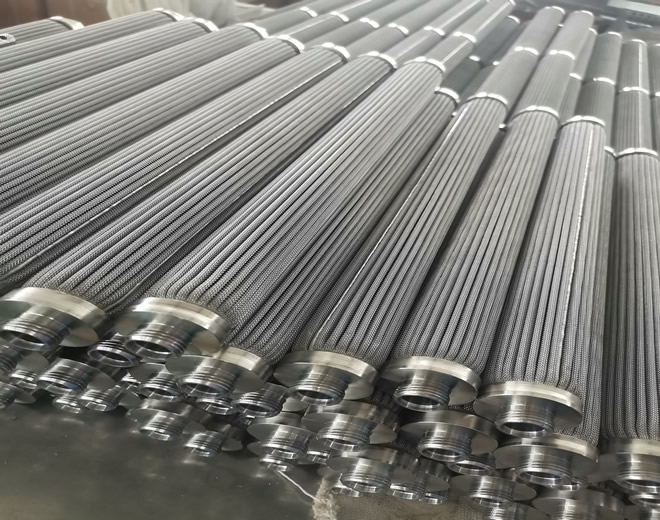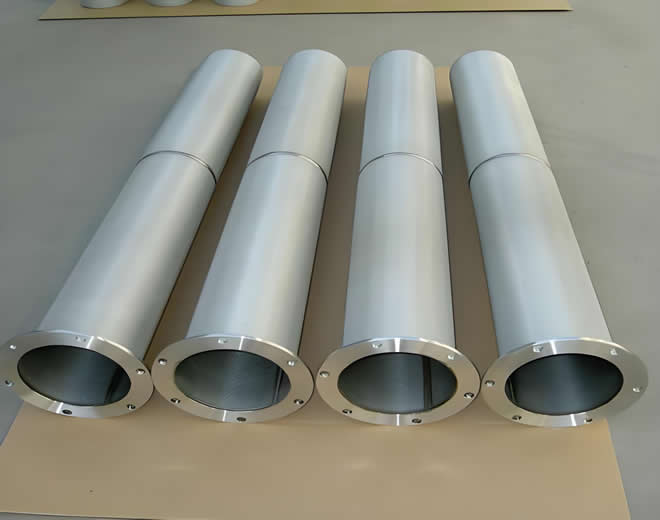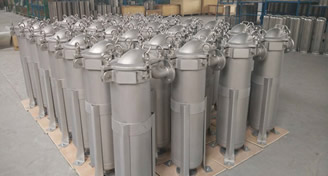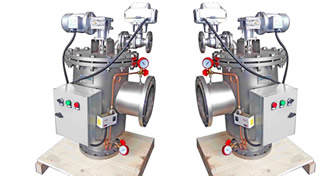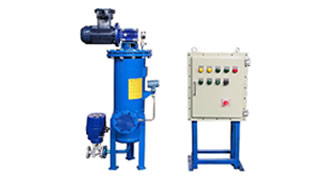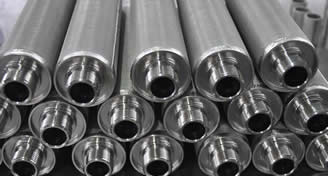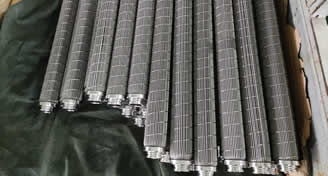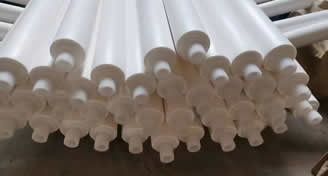
In the sulfonation industry, sulfur trioxide (SO₃) demister filter cartridges are core gas purification components, primarily used to remove entrained liquid SO₃ acid mist and sulfuric acid droplets from the gas stream after the sulfonation reaction. They ensure the safe and stable operation of subsequent processes or exhaust gas treatment systems. Their application process and key technical points are as follows:
Capture Droplets: Separate sub-micron SO₃ liquid droplets and sulfuric acid mist from the hot gas stream post-reaction through physical mechanisms.
Protect Equipment: Prevent acidic droplets from corroding downstream piping, fans, or exhaust treatment units (e.g., scrubbers).
Improve Efficiency: Reduce SO₃ loss, increasing raw material utilization; prevent mist from interfering with exhaust gas monitoring.
In sulfonation processes, the demister is typically installed after the SO₃ sulfonation reactor and before the exhaust gas treatment system:
Reactor → Cooler → SO₃ Demister (Filter Cartridges) → Fan → Exhaust Purification (Scrubber) → Emission
Inlet Gas Conditions:
Temperature: Typically 40-80°C (must be strictly controlled; too low leads to SO₃ condensation and filter blinding).
Mist Concentration: SO₃/sulfuric acid mist content can range from hundreds to thousands of ppm.
Gas Flow Rate: Depends on plant scale (e.g., tens of thousands of Nm³/h for large units).
Filtration Principle:
Inertial Impaction: Droplets collide with and adhere to fiber surfaces as gas flows through the filter media.
Diffusion & Interception: Fine droplets contact fibers via Brownian motion.
Condensation & Capture: Some gaseous SO₃ condenses on the fiber surface and is trapped.
Captured droplets coalesce on the fibers and drain into a sump.
Filter Cartridge Characteristics:
Material: Typically glass fiber (acid-resistant, moisture-proof), PTFE, or special alloy fibers.
Structure: Often pleated or cylindrical to increase surface area (single cartridge area can reach 10-20 m²).
Efficiency: Can capture droplets sized 0.1-3 μm, with typical removal efficiency >99.5%.
Pre-coating (Required in some systems):
New cartridges may need pre-coating with inert powder (e.g., diatomaceous earth) to form a protective layer against initial acid mist contact.
Temperature Control:
Strict Insulation: The filter housing requires heat tracing and insulation to prevent temperature from falling below the SO₃ dew point (~60-80°C), which causes crystallization and blockage.
Delta-T Monitoring: Monitor temperature differential across the demister. An abnormal pressure drop increase may indicate clogging.
Pressure Drop Monitoring:
Normal ΔP: Approximately 500-1500 Pa.
Initiate cleaning or replacement when ΔP rises to a set point (e.g., 2500 Pa).
Cleaning & Regeneration:
Offline Pulse Cleaning: Use dry air or nitrogen for reverse pulse-jet cleaning to remove accumulated acid mist.
Online Cleaning: Some systems allow regeneration with hot steam or air.
Waste Handling: Collected sulfuric acid must be drained to a neutralization system.
Replacement Cycle:
Varies with operating conditions, typically 6 months to 2 years. Failure indicators include persistently high ΔP and excessive acid mist detected in the exhaust.
| Issue | Possible Cause | Solution |
|---|---|---|
| Rapid Filter Blinding | Temperature too low causing SO₃ solidification | Increase heat tracing temperature; check insulation |
| High Acid Mist in Exhaust | Cartridge damage or seal failure | Shut down for leak check; replace cartridge or seals |
| Abnormal ΔP Fluctuation | Large fluctuations in gas humidity | Optimize upstream cooling process; stabilize inlet conditions |
| Cartridge Corrosion/Perforation | Material not resistant to high-temperature acid mist | Select PTFE-coated or alloy fiber cartridges |
Advanced Materials: e.g., PTFE membrane laminated on glass fiber, enhancing acid resistance and cleaning efficiency.
Smart Monitoring: Integration of ΔP sensors with online exhaust analyzers for predictive maintenance.
Modular Design: Facilitates partial cartridge replacement, minimizing downtime.
In the sulfonation industry, SO₃ demister filter cartridges are critical precision-filtration components ensuring long-term system operation. Their effective use relies on appropriate material selection, strict temperature control, timely pressure drop monitoring, and standardized maintenance procedures. Proper application not only reduces equipment corrosion and environmental pollution but also improves sulfonation product yield and quality.