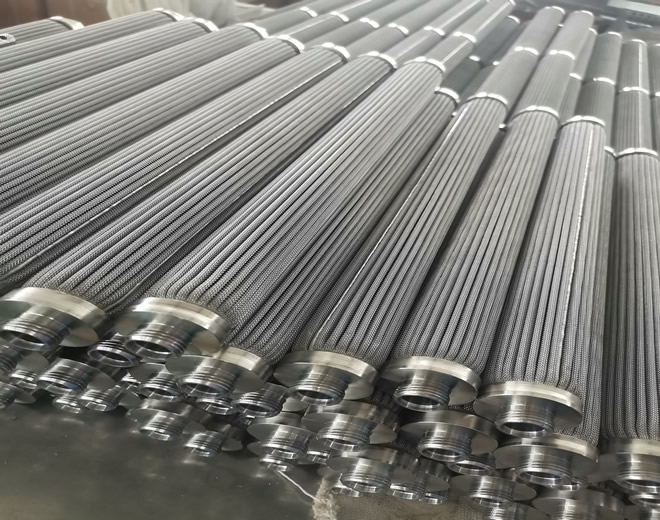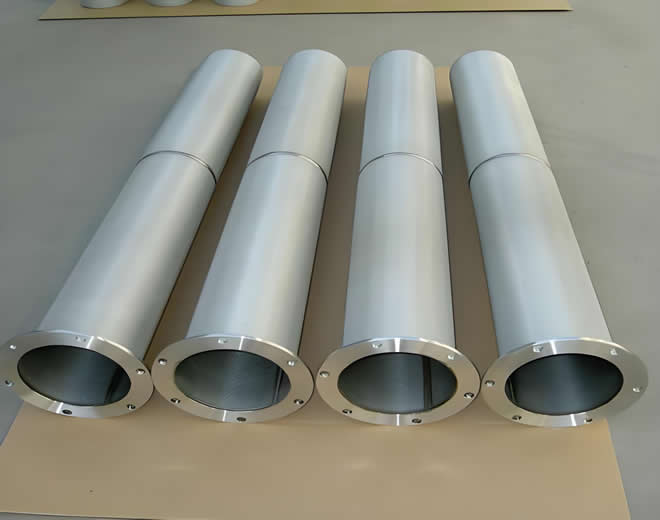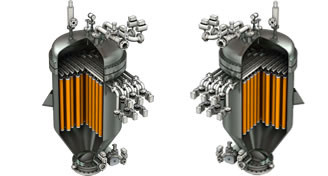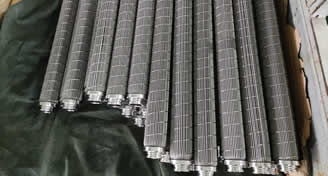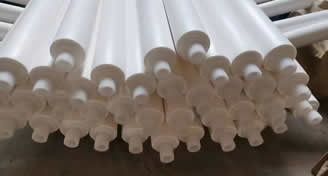
Stainless steel melt filter cartridges for chemical fibers are core filtration components used in the production process of synthetic fibers (such as polyester, nylon, polypropylene). They are installed in melt pipelines or spin packs to precisely filter the high-temperature, high-pressure polymer melt. Their primary function is to remove impurities, gel particles, unmelted material, carbonized particles, and other foreign substances from the melt, ensuring the continuity and stability of the spinning process and the quality of the final fiber product.
Precision Filtration for Enhanced Quality: They remove impurities at the micron or even sub-micron level, preventing defects in fibers such as broken filaments, fuzz, color deviation, and uneven strength. They are crucial for producing high-quality, high-performance fibers (especially micro-denier fibers, industrial yarns, tire cord, etc.).
Protection of Critical Equipment: They prevent clogging of the micro-holes in the spinneret plates within the spin pack, extending their service life, reducing downtime for replacements, and improving production efficiency.
Stabilization of the Production Process: They ensure melt purity and flow stability, enabling a continuous and uniform spinning process while reducing production fluctuations and waste rates.
Resistance to Extreme Operating Conditions: They are specifically designed for the harsh environment of chemical fiber melts: high temperature (typically 260°C–320°C), high pressure (up to 30 MPa or higher), high viscosity, and potential corrosiveness.
Core Filtration Media:
Metal Fiber Sintered Felt: The mainstream and high-performance choice. It is made by layering webs of stainless steel fibers of varying diameters (micron-level) and sintering them under high temperature and vacuum. This creates a three-dimensional, interconnected network with tortuous pores.
Advantages: High porosity (can exceed 80%), high dirt-holding capacity, stable and high filtration precision, good mechanical strength, resistance to冲刷, and capability for cleaning and reuse.
Common Materials: 316L stainless steel is predominant due to its excellent high-temperature and corrosion resistance. For especially harsh environments (e.g., acidic byproducts in nylon production), alloys like Hastelloy or Inconel may be used.
Filtration Rating:
Usually expressed as absolute filtration rating (μm), meaning the size of the smallest particle that is 100% retained.
Common range in chemical fibers: Typically 10μm, 15μm, 20μm, 25μm, 40μm, etc., selected based on product grade and placement in the process (pre-filtration, final filtration).
Structural Form:
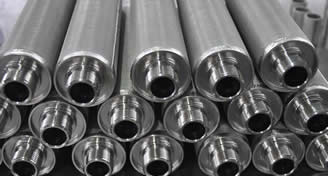
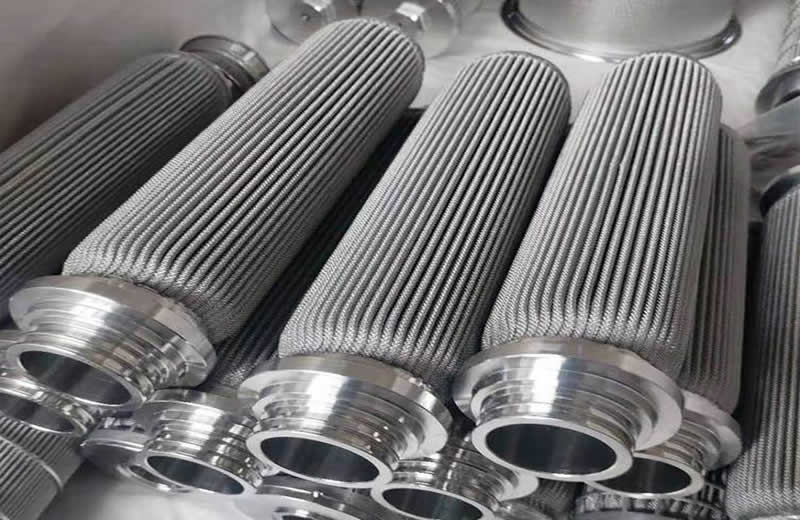
Common Shape: Primarily candle-shaped filter elements, sealed at one end with a connection interface at the other.
Typical Construction:
Inner Core/Support: A central support tube (perforated pipe or screen) providing mechanical strength.
Filtration Layer: The metal fiber sintered felt wrapped around the inner core.
Protective Layer: Sometimes a coarse metal mesh is added on the outermost layer to prevent mechanical damage to the felt.
End Caps and Sealing: Welded stainless steel end caps, equipped with specialized metal gaskets (e.g., figure-8 rings) to ensure high-pressure sealing against the filter housing.
Application Points:
Before the Spin Pack (Final Filtration): The last line of defense, directly protecting the spinning assembly.
In Melt Transfer Lines: Serving as main pipeline filters.
At Reactor Outlet or after Booster Pumps: Removing gels and particles generated during the process.
Working Process: Driven by pressure, the high-temperature polymer melt flows from the outside of the cartridge through the dense fiber felt layer. Impurities are trapped on the outer surface or within the depth of the cartridge, while the purified melt gathers and exits through the central support core.
Replacement Differential Pressure: As impurities accumulate, the pressure differential (ΔP) across the cartridge increases. When ΔP reaches a set value (e.g., 8–12 MPa, depending on the specific process), the cartridge needs to be replaced during shutdown.
Regeneration: Metal fiber sintered felt cartridges can be cleaned via online or offline backflushing (using high-pressure inert gas like nitrogen) to remove some surface contaminants. They can also undergo high-temperature calcination (burning off organics in a muffle furnace) and ultrasonic cleaning. After strict inspection, they can be reused for a limited number of cycles, helping to reduce production costs.
| Feature | Chemical Fiber Melt Filter Cartridge | Standard Industrial Stainless Steel Cartridge |
|---|---|---|
| Operating Environment | High temp, high pressure, high-viscosity polymer melt | Ambient/moderate temp, low pressure, gas or low-viscosity liquid |
| Core Material | Primarily metal fiber sintered felt, emphasizing depth filtration and high dirt capacity | May be metal wire mesh, sintered powder, etched sheet, etc. |
| Design Pressure | Very high (typically ≥15 MPa) | Relatively low (typically <1 MPa) |
| Sealing Requirements | Extremely stringent, specialized high-pressure sealing design | Conventional sealing |
| Cleaning/Regeneration | Typically designed for cleaning and regeneration | Often disposable or for simple rinsing |