Differences among 304, 316 and Duplex Stainless Steel
11-10-2026
Pageviews:5
Share:
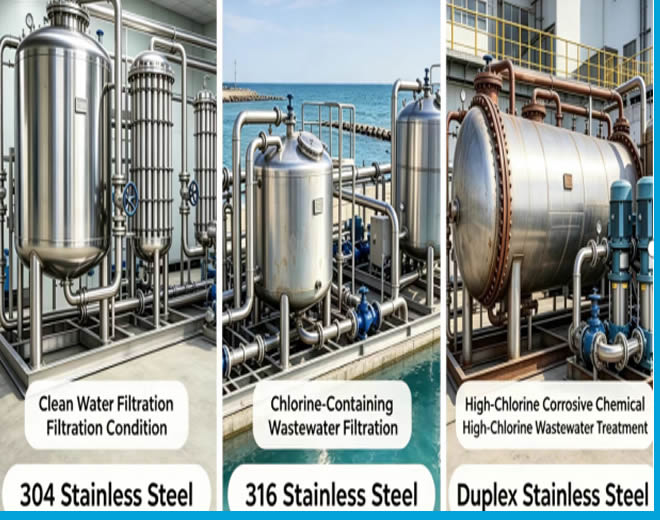
Material Basics - 304 stainless steel: Austenitic stainless steel of chromium-nickel series, without molybdenum.
- 316 stainless steel: Austenitic stainless steel of chromium-nickel-molybdenum series, with molybdenum added.
- Duplex stainless steel: Composite microstructure of austenite and ferrite. It has higher chromium content and contains molybdenum and nitrogen.
coreDifferences & Performance Corrosion Resistance
- 304 stainless steel: Resists fresh water, atmosphere and weak organic acids. Susceptible to pitting corrosion in chloride media.
- 316 stainless steel: Molybdenum improves chloride resistance, outperforming 304. Suitable for chloride wastewater and regular chemical fluids, yet vulnerable to high-concentration chloride.
- Duplex steel: Superior resistance to chloride pitting and stress corrosion cracking. Far more stable than 316 in severe corrosive conditions.
Mechanical Strength 304: Moderate strength, good toughness and easy to bend and process.
316: Slightly higher strength than 304, with processing properties similar to 304.
Duplex steel: Highest strength, excellent resistance to scouring and high pressure.
Temperature Adaptability
304 and 316: Applicable for medium and high temperatures with good toughness at high temperatures.
Duplex steel: Not suitable for long-term ultra-high temperature service. It shows outstanding advantages under medium-temperature and highly corrosive conditions.
Application Scenarios (Filtration Industry)
- 304: Clean water, ordinary room-temperature industrial wastewater and chloride-free media for general basic filtration.
- 316: Chloride-containing wastewater, seawater and chemical liquids. It is the most commonly used material for filter elements.
- Duplex stainless steel: High-chloride and strongly corrosive chemical wastewater, harsh working conditions with both high pressure and corrosion.