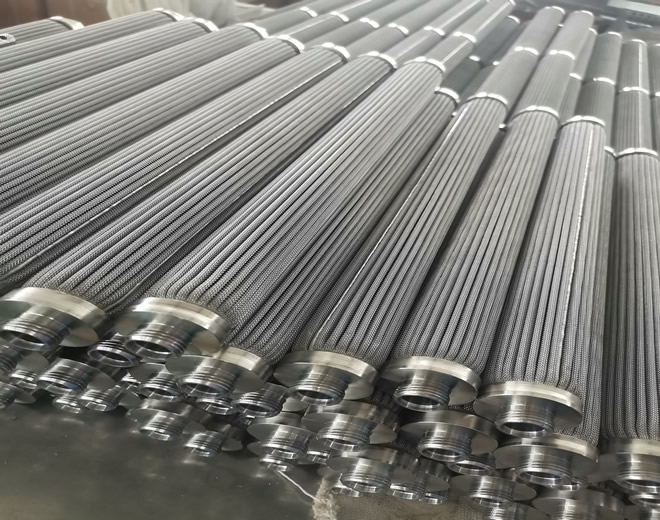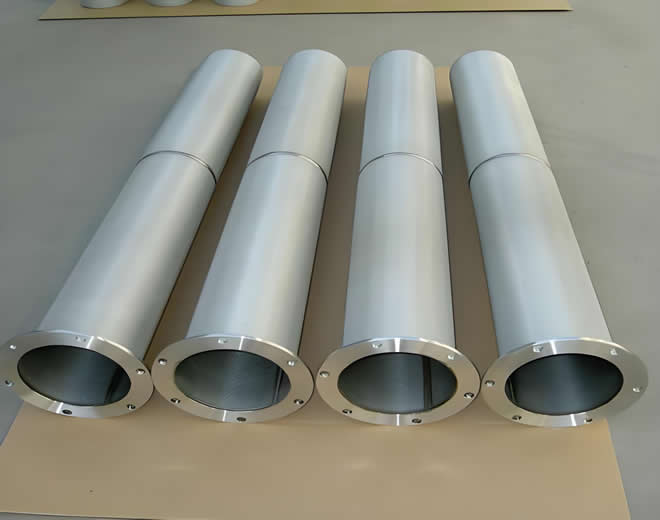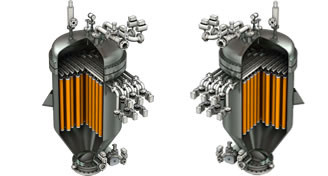
Catalyst Filtration and Recovery
Used in processes such as catalytic cracking and hydrotreating to separate catalyst particles, prevent catalyst loss, and recover valuable catalyst powder.
Crude Oil and Product Oil Filtration
Filters impurities (e.g., sand, rust) and additive residues from crude oil, ensuring the safe operation of downstream equipment (e.g., heat exchangers, reactors) and improving product purity.
Polymer Melt Filtration
Removes gels and carbonized particles from polymer melts during the production of polypropylene, polyethylene, etc., ensuring product quality.
Gas Purification
Filters particulate matter and liquid droplets from process gases such as natural gas and hydrogen, protecting equipment like compressors and valves.
Wastewater Treatment and Recycling Systems
Treats oily wastewater to achieve oil-water separation, meeting environmental discharge or reuse standards.
High Temperature and Pressure Resistance
Capable of operating continuously in harsh environments ranging from -200°C to 800°C under high differential pressure, suitable for severe processes like high-temperature cracking and hydrogenation.
Strong Corrosion Resistance
Made from high-grade stainless steel materials (e.g., 316L), resistant to corrosive substances such as sulfides and acidic media.
High Precision and High Flow Capacity
Wide filtration precision range (typically 1–100 microns), uniform pore structure, high dirt-holding capacity, and slow pressure drop increase, reducing replacement frequency.
High Mechanical Strength
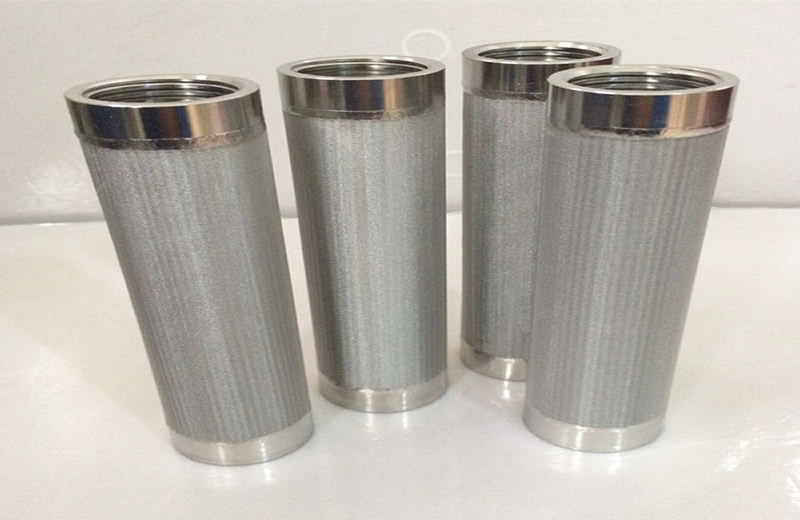
Stable sintered mesh structure withstands frequent backwashing and high-pressure blowback without deformation or damage.
Easy Regeneration
Can be thoroughly regenerated through methods such as ultrasonic cleaning or high-temperature calcination, lowering long-term operating costs.
Refineries
Used for residual oil filtration, lubricant dewaxing, and fuel nozzle protection.
Chemical Plants
Filters quench oil in ethylene plants and removes catalyst particles in PTA production.
Natural Gas Processing
Filters liquid accumulation and impurities in pipelines, protecting desulfurization units and turbines.
Oilfield Water Injection Systems
Filters suspended solids in injection water to prevent formation blockage.
Selection Criteria
Choose filtration precision, number of mesh layers, and material based on medium characteristics (viscosity, corrosiveness), particle size, operating pressure/temperature, and flow rate.
Installation Design
Often configured in parallel or series with multiple cartridges, equipped with differential pressure alarms for uninterrupted maintenance switching.
Cleaning Cycle
Monitor pressure drop changes and perform regular backwashing or chemical cleaning to prevent pore clogging and increased system resistance.
Avoid Chloride Ion Corrosion
Use ultra-low carbon stainless steel or special alloys in environments containing chloride ions.
Explosion-Proof Requirements
Must comply with explosion-proof design standards in hazardous areas, e.g., using conductive structures to dissipate static electricity.
Customization Needs
Non-standard shapes (e.g., conical, custom geometries) or special connection designs may be required for specific working conditions.