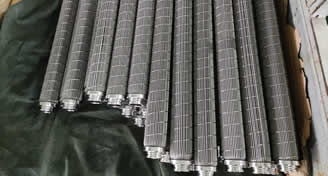
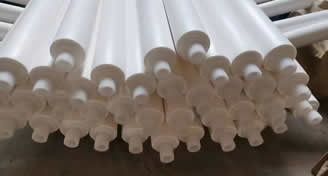
In the recycled polyester (rPET) industry, black specks are like stubborn “flaws” on the product’s surface, determining whether the material can advance from low-end fibers to high-value applications such as bottle-grade flakes or electronic packaging. These troublesome black spots primarily originate from label charring, impurity contamination, and polymer thermal degradation. How can they be efficiently and thoroughly eliminated? Stainless steel melt filter cartridges, with their outstanding performance, have become the core technical solution to this industry pain point.
1. The Challenge: Why Are Black Specks So Stubborn?
Black specks in recycled polyester are not a single substance but a mixture of various impurities:
-
Carbonized Contaminants: Residual label adhesives or other plastics (e.g., PVC) in the recycled material that carbonize during melting.
-
Thermal Degradation Particles: PET molecular chains break or cross-link under high or localized temperatures, forming tiny gel-like or carbonized black spots.
-
Inorganic Impurities: Trace amounts of sand, metal oxides, etc.
These impurities are small in size (typically between 10-50 microns), hard, and highly penetrative in high-temperature, high-pressure melt environments. Traditional filter screens or disposable filter bags often struggle to withstand melt conditions or lack sufficient precision, leading to filtration failure.
2. The Solution: Core Advantages of Stainless Steel Melt Filter Cartridges
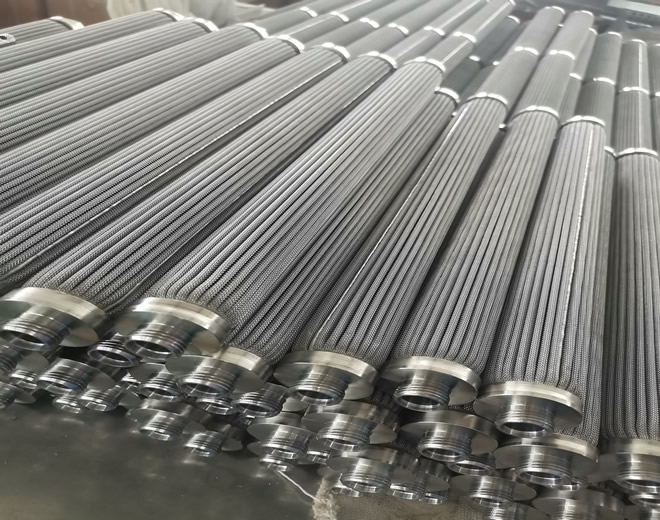
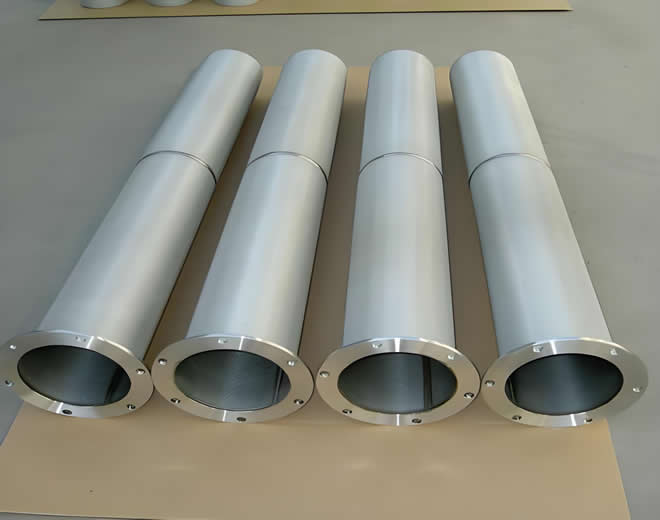
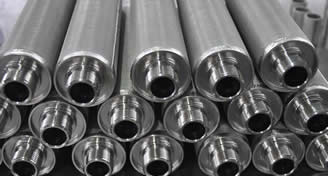
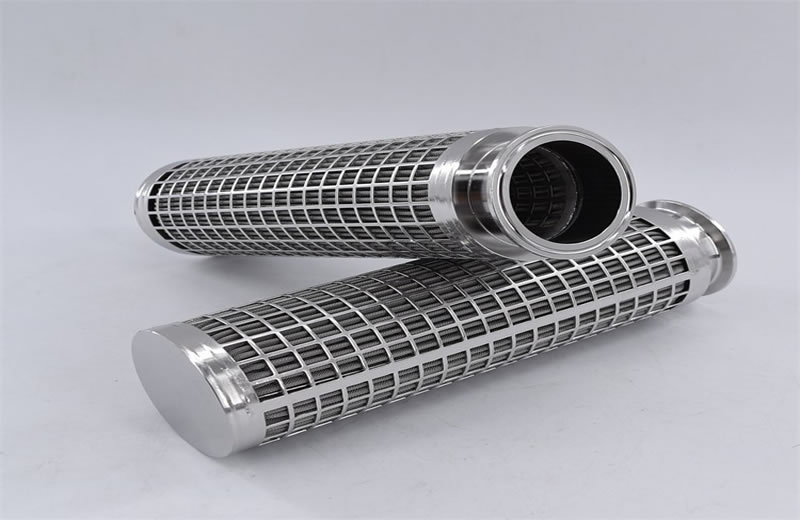
Stainless steel melt filter cartridges, particularly sintered stainless steel fiber cartridges, are designed specifically for high-pressure, high-temperature polymer melt filtration. They offer irreplaceable advantages in removing black specks from rPET:
1. Depth Filtration, Precision Capture
-
Three-Dimensional Network Structure: Unlike surface filtration, its internal complex three-dimensional pore network enables depth filtration of the melt. It captures not only surface particles but also adsorbs finer impurities. Filtration precision can be flexibly selected from 1 to 100 microns. For black speck issues, a precision of 15-25 microns typically achieves excellent removal results.
-
High Dirt-Holding Capacity: The deep structure allows it to retain more contaminants, extending filtration cycles and reducing replacement frequency.
2. Robust and Tolerant of Harsh Conditions
-
High Temperature and Pressure Resistance: The all-metal structure easily withstands the 280-300°C high temperatures and tens of megapascals of system pressure in rPET processing, with no risk of deformation or breakthrough.
-
Exceptional Mechanical Strength: Resists impact from high melt flow rates and pressure fluctuations, ensuring stable filtration performance.
3. Long-Lasting and Cost-Effective
-
Cleanable and Reusable: This is its greatest economic value. When the pressure drop across the cartridge reaches the set limit, trapped impurities can be almost completely removed through professional ultrasonic cleaning, high-temperature calcination, or chemical cleaning, restoring performance like new. Cartridges can be reused dozens of times.
-
Low Total Cost of Ownership: While the initial investment is higher than disposable filter media, the long-term cost per cycle is significantly lower. It also reduces material waste and labor costs associated with frequent filter changes.
4. Ensures Process and Product Consistency
-
Stable Filtration Efficiency: Filtration precision remains consistent throughout the service cycle, preventing “impurity breakthrough” due to increased contaminant loading. This ensures consistent output melt quality.
-
Enhances Product Value: Thorough removal of black specks allows rPET to meet stringent appearance and purity requirements for high-end applications, directly increasing product marketability and competitiveness.
3. Practical Application: Maximizing Filter Cartridge Performance Systematically
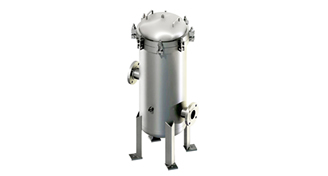
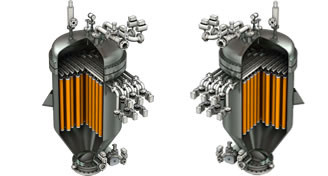
Relying solely on the cartridge is not the optimal approach. In an rPET production line, it typically serves as the core component of a "multi-stage filtration system":
-
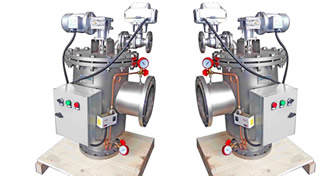
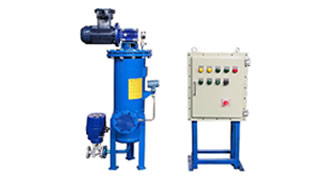
Primary Protection (Coarse Filtration): Use plate filters or backflush filters (80-150 microns) upstream to remove large contaminants, protecting the main cartridge and extending its lifespan.
-
Core Fine Filtration (Main Stage): The stainless steel melt filter cartridge plays the leading role here, installed after the melt pump. With a precision of 10-25 microns, it removes the vast majority of carbonized particles and gels causing black specks.
-
Final Polishing (Optional): For ultra-high standards (e.g., medical or electronic grade), a higher-precision cartridge (e.g., 5-10 microns) can be added at the end for final assurance.
4. Conclusion
The answer is a definitive yes—and an efficient one at that. Stainless steel melt filter cartridges are not only “capable” of removing black specks from recycled polyester but are also widely recognized as one of the most reliable and cost-effective ultimate solutions in the industry.
Leveraging their depth filtration precision, unparalleled durability, and regenerative economy, they transform troublesome black speck impurities into manageable production costs. For rPET producers aiming to enhance product quality and break into high-end markets, investing in a fine filtration system centered on high-performance stainless steel melt filter cartridges is not an expense but a strategic upgrade critical to future competitiveness.