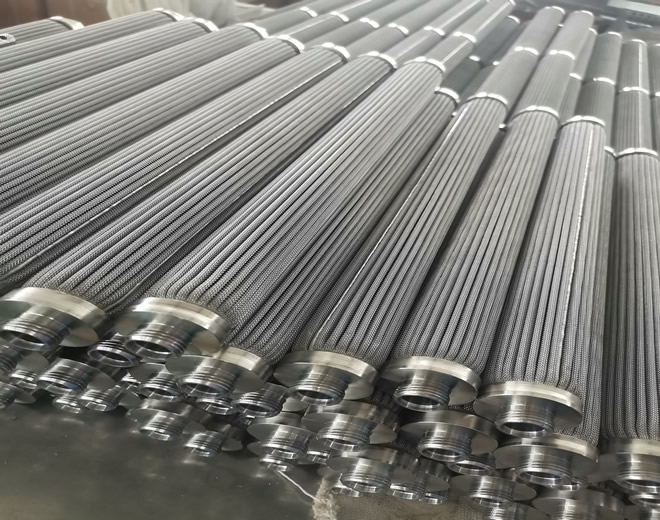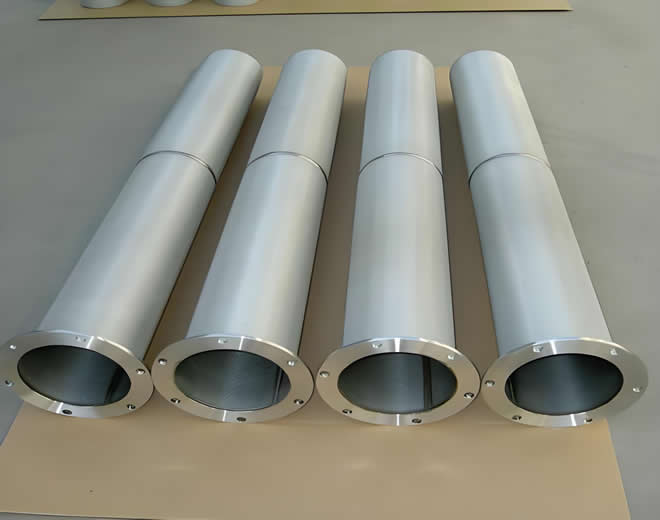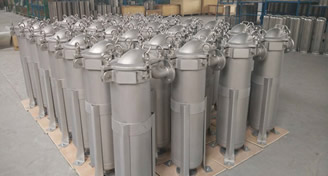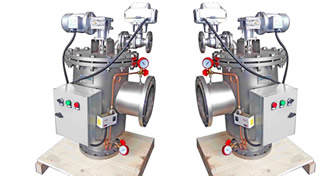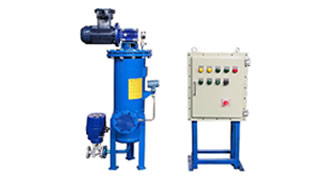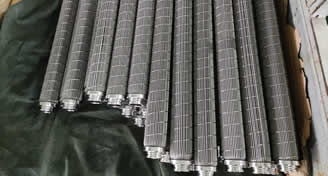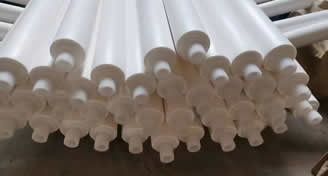
Core Role: The primary role of a pleated screen filter cartridge is to efficiently remove suspended solids, particulates, and other impurities from industrial wastewater, enabling purification and recycling. In wastewater treatment systems, it typically serves as a precision filtration or security filtration unit to protect downstream equipment.
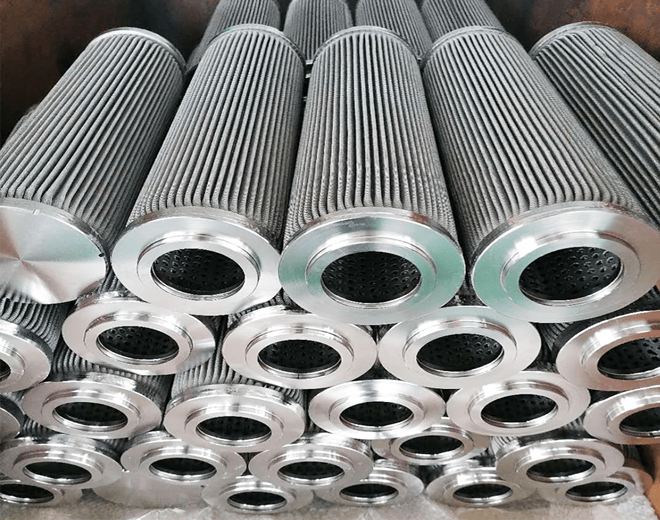
As a pre-treatment unit: In industries such as electroplating, chemicals, and pharmaceuticals, it treats wastewater containing strong acids, alkalis, and solvents. Its excellent chemical compatibility ensures stable filtration.
In wastewater reuse systems: It acts as a "security filter" before reverse osmosis (RO) and nanofiltration (NF) systems, effectively capturing small particles to protect downstream membrane elements and extend their service life.
Separation and removal of impurities: Through physical sieving, it effectively removes suspended solids (SS), sludge, rust, scale, and various particulates, reducing water turbidity.
Two main types are used in industrial wastewater treatment:
Material: Microfine polypropylene fiber membrane and PP support layer.
Operating conditions: Resists acids and alkalis (pH 1-12); temperature max. 75°C.
Applications: RO pre-treatment, general chemical solvents, oilfield produced water reinjection, food & pharmaceutical wastewater.
Form: Single-use, replaced periodically.
Key advantage: Cost-effective and widely used.
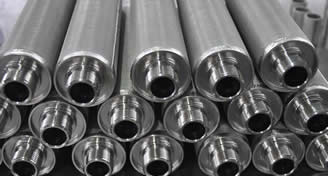
Material: Stainless steel woven mesh or sintered felt (SUS304, SUS316L).
Operating conditions: Up to400°C; resists higher concentrations of acids and alkalis.
Applications: High-temperature, high-pressure, high-viscosity liquids, and highly corrosive wastewater.
Form: Reusable – cleaned and regenerated by chemical or ultrasonic methods; service life 2–3 years.
Key advantage: High mechanical strength, withstands extreme conditions, cleanable/regenerable; higher initial investment.
Both types work on the same principle – the pleated structure:
Increased surface area: The pleating folds the filter media, greatly increasing effective filtration area – typically 5–10 times that of a standard cylindrical cartridge. This allows higher flow rates and greater dirt-holding capacity.
Depth filtration mechanism: Contaminants are captured not only on the surface but also deep within the filter layer, giving the cartridge very high dirt-holding capacity. Some metal cartridges use multi-layer graded pore designs for staged capture, achieving filtration efficiency >99%.
Comprehensive performance advantages: Compared to traditional cartridges, key benefits include high flow rate, low pressure drop – enabling fast filtration with low energy consumption. Additionally, material properties or special treatments provide excellent heat and corrosion resistance.
Choose a metal pleated cartridge if: wastewater temperature exceeds 80°C, it is highly corrosive, or you need to reduce long-term consumable costs (reusable stainless steel is ideal).
Choose a PP pleated cartridge if: treating conventional wastewater at moderate temperatures – it offers the best cost-effectiveness.
Determine required accuracy: Identify the particle size to be removed, then select a cartridge with the corresponding filtration rating. Metal cartridges: 1–300 μm; PP cartridges: 0.1–60 μm.