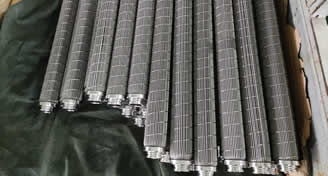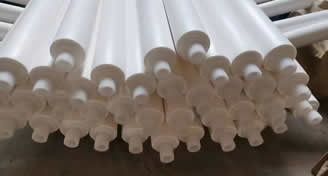
When looking purely at service life, the conclusion is clear:
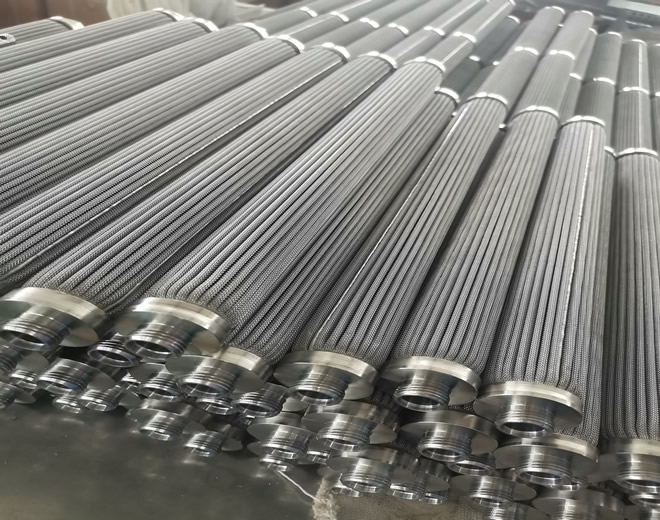
Under normal use and maintenance, stainless steel filter cartridges (5–10+ years) typically last significantly longer than ceramic ones (1–2 years).
However, there’s an important nuance: what exactly does “service life” mean? Let’s break it down.
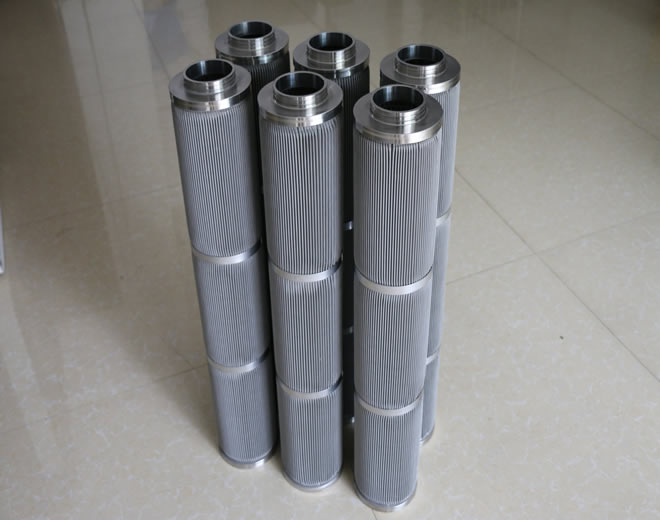
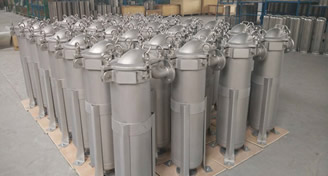
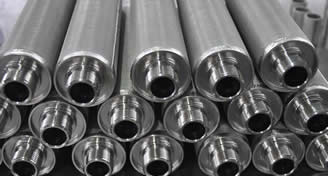
Stainless steel filter: Service life refers to the physical life of the filter structure itself. As long as it isn’t physically damaged or irreversibly clogged, it can last almost indefinitely. Manufacturer claims of 5–10 years are often conservative estimates – in ideal conditions, it could last much longer.
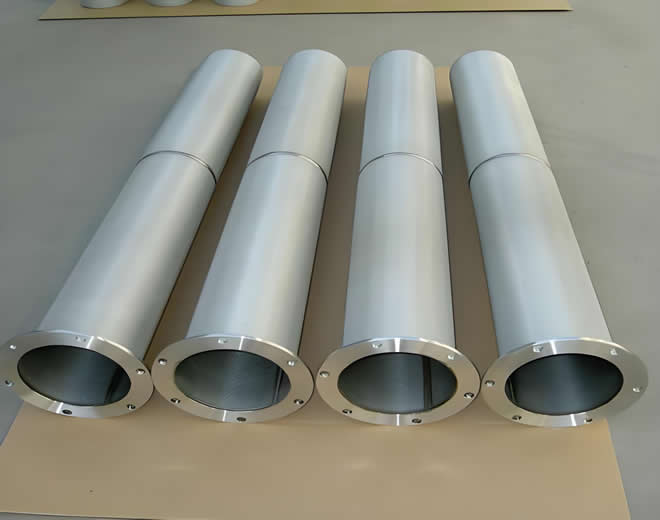
Ceramic filter: Service life refers to the effective filtration performance life. The ceramic surface gradually clogs with particles. Although you can restore performance by sanding or brushing the surface, each cleaning wears away the effective filter layer. After roughly 3–5 cleanings, the remaining wall becomes too thin to guarantee original filtration accuracy – then it must be replaced.
| Feature | Stainless Steel | Ceramic |
|---|---|---|
| Design service life | 5–10+ years (often longer) | 1–2 years (or by throughput, e.g. 10,000–20,000 litres) |
| Failure mode | Physical damage or irreversible clogging | Filter layer worn away, cracking, or loss of effective precision |
| Cleaning / regeneration cycles | Hundreds to thousands of backwashes / ultrasonic / chemical cleanings | Typically 3–5 sanding cycles, then must be replaced |
| Long-term maintenance cost | Low (rarely needs replacement) | Medium (requires new cartridge every 1–2 years) |
Material advantage: Stainless steel is a metal – tough, ductile, and fatigue‑resistant. Ceramic is brittle; repeated thermal shocks, water hammer, or accidental knocks can easily cause micro‑cracks or outright breakage.
Regeneration method: Stainless steel can be aggressively backwashed, ultrasonically cleaned, or chemically treated without damaging the filter medium. Ceramic relies on physical abrasion, which consumes the filter itself.
End of life: For stainless steel, “end of life” usually means the mesh is irreversibly embedded with non‑removable particles (e.g., silicon or sulfur compounds) or the element is physically deformed. This is rare in residential or typical industrial applications.
Stainless steel’s theoretical life is very long, but its effective filtration life can be shorter than you think.
For low‑precision applications (e.g., trapping sand, rust particles): stainless steel works great and can last virtually forever.
For high‑precision applications (e.g., removing bacteria): If you choose a very fine stainless steel filter (e.g., 0.2 µm sintered mesh) and it gets clogged with irreversible contaminants like colloids or oils, backwashing may not fully restore its original precision. At that point, the cartridge is still intact but its filtration efficiency has dropped significantly – becoming a mediocre pre‑filter. The user may not even notice the decline.
Ceramic filters fail more obviously: flow rate drops → you clean it → after a few cleanings you can see it thinning → you know it’s time to replace.
| Your priority | Better choice | Reason |
|---|---|---|
| Maximum durability & no frequent replacement | Stainless steel | The structure itself barely wears out. Ideal for industrial recirculating water, pre‑filtration, or heavy‑duty coarse filtration. |
| Reliable, consistent high‑precision performance | Ceramic | Although total life is shorter, each regeneration restores reliable performance. Replace on schedule – you maintain consistent water quality. Ideal for drinking water. |
| Trade‑off: longevity vs. reliability | — | Stainless steel is the “centenarian” but may become “confused” in old age (undetected precision loss). Ceramic is the “short‑lived but sharp until the end.” |
One‑sentence conclusion:
If you hate changing filters and only need coarse filtration (e.g., stopping large particles), stainless steel can last a lifetime.
If you need reliable, high‑precision filtration (e.g., bacteria removal in drinking water) and don’t mind periodic replacement, choose ceramic – it “stays sharp” until it’s time to change.